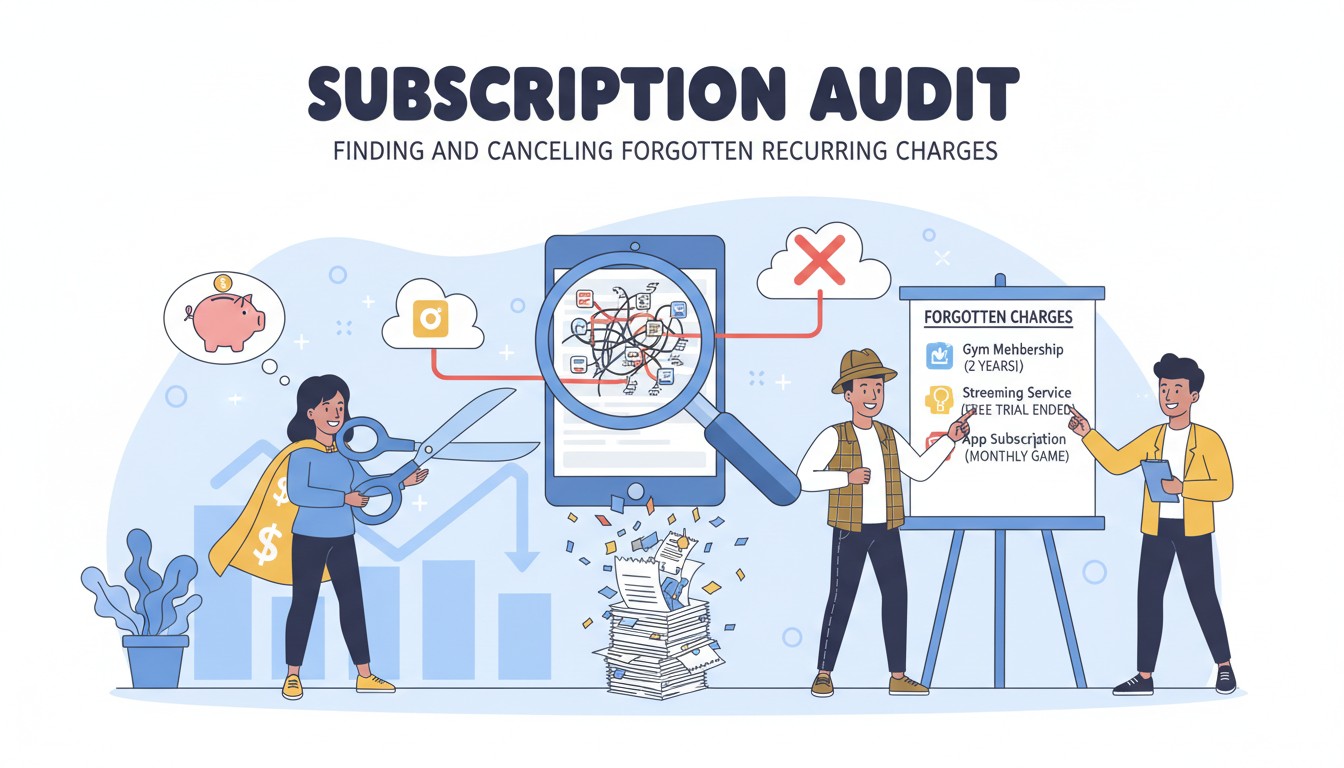
The subscription economy runs on a simple trick, because it turns one-time purchases into indefinite financial commitments that almost nobody stops to re-evaluate. While most households obsess over visible expenses like rent and groceries, the subscription management analysis from Westfield Bank puts the average American’s forgotten subscriptions at 12 paid services totaling $273 a month, or $3,276 a year. That total would cover a decent used car.
This creates a strange paradox, since the most fixable kind of financial waste usually gets the least systematic attention. The same households that comparison-shop to save $12 on groceries skip the one review with the best hourly return they’ll ever earn, and a subscription tracking study highlighted by Discover found that a simple 20-minute audit identifies roughly $47 in monthly recurring charges that can be eliminated immediately. Over the first year, that 20-minute session pays for itself about 141 times over, a return that beats almost anything else you can do at lunch.
In this article
- The Invisible Architecture: How Subscriptions Infect Your Budget
- The Psychology of Subscription Blindness: Why You Forget to Cancel
- Tracking vs. Canceling: The Two-Phase System That Actually Works
- The Multiplier Effect: How One Cancellation Creates Financial Freedom
- Real-World Transformations: Subscription Hoarders Who Reclaimed Their Cash
- Practical Blueprint: Your 30-Day Subscription Liberation Plan
- The Layered Prevention Paradigm: Why One Audit Will Never Be Enough
- Your Subscription Freedom Is Hiding in Plain Sight
The Invisible Architecture: How Subscriptions Infect Your Budget
Every recurring charge rests on psychological design that a product team tested before you ever saw the signup page. Free trials usually convert through inertia rather than intention, because canceling before day seven takes effort while letting the trial lapse takes nothing. Monthly fees then feel trivial next to a $1,200 rent payment. Auto-renewal clauses make sure the question never comes up, since the default is always that you keep paying, and opting out means noticing the charge, logging in, and clicking through screens built to stall you.
Take something as mundane as a streaming service. You signed up for a 7-day trial to watch one movie, forgot to cancel, and now it’s month nine and you’ve paid $107.91 for a service you opened twice. The $11.99 charge felt invisible until you multiply it by the seven other subscriptions you’ve forgotten. That one “try it free” decision ends up determining whether you fund a vacation or a company’s auto-renewal revenue.
App developers understand this psychology intimately. Most design their cancellation flows around it. Cancellation gets buried in settings menus, routed through phone queues, or handed to chatbots that “can’t find your account.” Renewal reminders arrive formatted like spam, and “pause” options default back to active after 30 days unless you remember to turn them off. None of this is accidental; each friction sits where your decision fatigue is highest, and the result is a portfolio of entries you never agreed to keep.
The Subscription Infection Model: How Charges Multiply
Patient Zero: you accept a free trial for a service you genuinely needed once
Incubation Period: 7-30 days of free use end with automatic conversion to a paid plan
Silent Multiplication: the monthly charge feels small enough that you stop noticing it after about 60 days
Full-Blown Infection: you’re carrying 12 or more subscriptions totaling $200+ a month, more than you can mentally track
The Psychology of Subscription Blindness: Why You Forget to Cancel
Given how much an audit returns, the obvious question is why so few people usually run one, and the answer is a mix of decision fatigue, status quo bias, and a financial education gap that trains attention toward earning more rather than plugging invisible leaks.
The Trivialization Trap: When $9.99 Feels Too Small to Matter
Human brains handle a $9.99 price tag well and handle compounding terribly, which is why $9.99 feels trivial next to a $1,200 rent payment while canceling feels like pinching pennies. The distortion ignores that $9.99 a month becomes $119.88 a year, which covers close to a month of groceries or a budget flight home. Unless the service earns its keep monthly, the small statement number is doing real damage to the annual one.
Marketing reinforces the bias on purpose, because pricing everything at “Only $9.99 a month!” frames the cost as coffee money instead of car-insurance money. The yearly total stays abstract until a full audit forces the addition. The industry leans on this: most services price between $4.99 and $14.99, which feels disposable alone but compounds into thousands a year once eight or ten stack up.
The Sunk Cost Fallacy: “I Might Use It Again”
That fitness app you haven’t opened since January stays because “I might start working out again,” and the language software survives on “I’ll use it when work calms down.” Both rationalizations skip the fact that settles the question: re-subscribing later is always an option if you do start running again. The sunk cost fallacy treats last winter’s payments as investments that future payments would justify, even though that money is gone no matter what you decide today.
The fallacy works because cancellation feels permanent when it usually isn’t. The model trains you to ask “what if I delete it and lose all my progress?”, and most services keep your data for months after you cancel. You’re pausing the billing rather than erasing your work, and the reactivation button will still be there when you actually need the app again.
The Decision Fatigue Wall: Too Many Subscriptions to Track
Modern life already demands thousands of small decisions a day, so adding “evaluate this subscription” feels like one chore too many. Letting the $7.99 keep charging beats spending 15 minutes hunting for the cancel button, confirming you really want to leave, and filling in the “why are you leaving?” survey. The retention teams know this arithmetic, and they design the cancellation flow around the moment you’re most likely to give up.
Tracking vs. Canceling: The Two-Phase System That Actually Works
Audits fail when people try to do everything at once, identifying, evaluating, and canceling in one session that usually ends with two cancellations and a headache. The fix is separating tracking from canceling, two different cognitive tasks that need, in practice, different days.
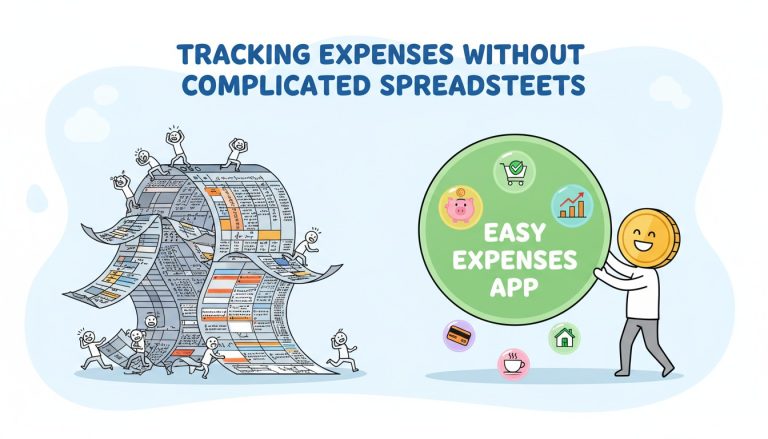
The first phase is purely observational, since you’re acting as a detective mapping the crime scene rather than a judge passing sentence. A tool like Rocket Money’s free version, which Rob Berger has tested for years, scans your accounts and lists every recurring charge it finds. Don’t cancel anything yet; just count the entries, because the list usually runs well past the two or three services you’d have named from memory.
Phase two is the prosecutor phase: did you use it in the last 30 days, and will you use it in the next 30? Anything that fails both tests goes on the cancellation list, with no debate and no “but the annual plan was cheaper” arithmetic. This reflects a behavioral finance principle documented by Discover: decisions made in calm, separate moments are 40% more likely to stick than decisions made under pressure.
The Two-Phase Audit Protocol
Discovery: use an app or a manual bank statement review to list every recurring charge, with no judgment and no cancellations
Evaluation: wait 48 hours, then review the list with fresh eyes and ask only whether you used it last month and will use it next month
Combined Session Failure: trying to evaluate and cancel in the same session leads to fatigue, excuses, and abandoned audits
The Multiplier Effect: How One Cancellation Creates Financial Freedom
Canceling subscriptions does more than save money: a single cancellation generates benefits beyond the monthly fee, although the fee itself is usually what gets attention first.
Consider the simple act of canceling a $12.99 streaming service you haven’t opened in three months. The direct result feels minor at first, just $155.88 back per year, but the effects multiply in ways the statement never shows. That $12.99 a month can shift to your emergency fund and get you to a $500 cushion three months faster, and the win usually builds enough confidence to audit other areas, from the phone plan to the insurance bill. One cancellation produces five cascading benefits, and most never appear on a bank statement.
The cascade runs in reverse just as fast. Keep the unused subscription because “it’s only $13.” That $13 a month becomes $156 a year before you’ve noticed anything. Then you justify keeping two more “small” subscriptions, and soon you’re spending $468 a year on digital services you never open.
The Liberation Tipping Point
Audits often feel pointless until the outflow drops by a visible amount, which usually means canceling three services before the $39 monthly reduction changes how your budget feels. Until then, each cancellation feels like a rounding error, even though the running total is anything but.
The subscription audit calculator from Westfield Bank puts numbers on it: the average person cancels 4.2 subscriptions per audit and saves $156 a month. That $156 does more than improve cash flow; it kills the background “where does my money go?” anxiety and leaves room for spending on what actually matters.
The Cancellation Cascade in Action
Initial Decision: cancel one unused $12.99 streaming service
Direct Result: $155.88 saved annually
Secondary Effects: mental relief of one fewer password, one fewer marketing email
Tertiary Effects: confidence to audit other areas, discovering three more cancelable subscriptions
Quaternary Effects: total savings of $67 monthly redirected to debt payoff, accelerating freedom by 18 months
Real-World Transformations: Subscription Hoarders Who Reclaimed Their Cash
Percentages get easier to act on once they become specific households, so the three audits below show what the process typically returns.
The Tech Worker Who Cancelled 23 Subscriptions
A software engineer earning $120,000 assumed his subscriptions were “under control” because he could afford them, probably the most common reason people skip the audit. Using Monarch Money’s subscription tracker, which notifies users three days before any recurring charge is due, he found 23 recurring charges totaling $368 a month. Many were trials for abandoned projects, duplicate services like two cloud storage accounts, and annual plans that auto-renewed unnoticed. Canceling 15 of them freed up $247 a month, or $2,964 a year, which he used to max out his Roth IRA, an investment estimated to reach $63,000 in 20 years.
The Single Mom Who Found Her Car Payment
One teacher earning $45,000 felt broke despite careful budgeting, and her bank’s subscription analysis tool revealed $187 in monthly recurring charges, nearly her car payment. The list included a $29.99 meal kit she never canceled after the promo ended, three streaming services when she only watched one, and a $49.99 “productivity suite” auto-renewed after a forgotten free trial. She canceled five subscriptions and saved $134 a month. That money paid off a credit card 14 months early and saved her $287 in interest.
The Retiree Who Stopped Subsidizing Silly Apps
A retired librarian on a fixed income found she was paying $89 a month for apps her grandkids downloaded years earlier: games, music services, and premium features she never used. Using the subscription tracking feature in her Discover app, she identified and cancelled them, saving $1,068 a year. The emotional impact proved bigger than the financial one: she stopped feeling fleeced by technology she didn’t understand and regained control over her money.
Practical Blueprint: Your 30-Day Subscription Liberation Plan
Understanding subscription audits is useless without a concrete plan. The four-week structure below moves you from subscription hoarder to financial minimalist without the overwhelm that sinks most audits.
Week 1: The Detection Mission
Download Rocket Money or Monarch Money and start with whichever trial fits; Rocket Money’s tracking is free, while Monarch runs $14.99 a month or $99.99 a year past the 7-day trial. Connect your primary checking account and one credit card, then let the app scan and build your list, which takes about 10 minutes. Resist canceling during the scan, because you’re gathering intelligence and the evaluation comes later.
Week 2: The Evaluation Matrix
Print or screenshot the list and answer three questions per entry: when did I last use this, when will I use it in the next 30 days, and could a free alternative replace it? Be brutally honest with the answers, because in my experience a hesitation on question three is enough to earn a place on the “probable cancel” list. Subscription audit research summarized by Westfield Bank found this matrix identifies 68% of subscriptions as cancelable, a figure that surprises most people.
Week 3: The Cancellation Sprint
Block 90 minutes on a Saturday morning and set a timer, because the deadline keeps the session from stretching into the afternoon. Cancel everything on your “probable cancel” list as fast as you can, and ignore the “are you sure?” messages and “50% off if you stay” offers. Click confirm, screenshot each cancellation for your records, and move on to the next entry. If a service insists on a phone call, Rocket Money’s cancellation concierge (Premium, about $7 a month) can handle it, although it doesn’t work on every service. Speed matters, because decisive action leaves less room for second-guessing than a slow approach does.
Week 4: The Automation Prevention
Set a calendar reminder for 90 days out titled “Subscription Audit,” because the audit only works if it repeats. Adopt one personal rule: no free trial without an immediate calendar reminder set five days before the conversion date. Use a virtual credit card service with a $50 spending cap, so an unwanted renewal becomes a declined charge instead of a surprise line. This layer separates one-time auditors from people who never pay for an unused service again.
The Layered Prevention Paradigm: Why One Audit Will Never Be Enough
The most common subscription audit mistake is treating it as a one-time event, as if one Saturday of cancellations could immunize a household forever. Professional organizers work in layers instead: a purge audit, then a prevention system, then maintenance audits, since each layer usually handles a different failure mode.
Start with the purge, meaning every service you haven’t opened in 30 days or more. Add prevention next: rules about free trials, virtual cards, and 90-day reminders that block new leaks at the source. Finish with maintenance, a quarterly audit that catches new subscriptions before they become forgotten ones and takes about 10 minutes once the system exists.
The layered prevention model described by Discover works because financial organization was never a perfection project; the systems only catch what your memory drops in practice. A quarterly 10-minute audit catches the subscription you forgot about long before it costs $120 in fees.
Your Subscription Freedom Is Hiding in Plain Sight
The audit you’ve been avoiding doesn’t live in a complicated spreadsheet or a weekend of research. It lives in the 20-minute app download, the honest look at whether you use what you pay for, and the Saturday cancellation sprint. The drain isn’t corporate greed, since companies mostly do what their revenue models reward; the real opponent is your own optimism bias and decision fatigue, which both respond to a simple system.
Reclaiming that money doesn’t take financial expertise or unusual willpower, because the method rests on separating detection from action. The liberation you’re looking for usually sits in the system that prevents future amnesia. You can pay only for what’s actually used, or keep funding free trials for companies whose business model counts on your forgetfulness.
Start this week with one concrete step: download the tracker, let it run its full 10-minute scan, and write down the total. That number, usually higher than you expect, is where the reset begins, and it’s the first time your bank account reflects your actual priorities instead of your forgotten past.
Key Takeaways
The average household wastes $273 a month on forgotten subscriptions, which is more than many car payments, and the cause is a set of cognitive biases that make small fees feel trivial and cancellation overwhelming.
A two-phase audit that separates detection from evaluation increases cancellation success by 40% compared with attempting everything in one exhausting session, because the two phases use different kinds of attention.
The multiplier effect means a single cancellation cascades into reduced mental load, higher financial confidence, and less future subscription creep. Most of those benefits never show up as a line item.
Layered prevention, meaning a purge audit plus cancellation rules plus quarterly maintenance, gives a household permanent protection against subscription accumulation for a setup cost of under three hours.
Anyone can reclaim the cash in 30 days with free tools like Rocket Money, the 30-day usage evaluation matrix, and one 90-minute cancellation sprint. The whole sequence costs less time than a single evening of streaming.